Deeply Dippy - it's all part of Déise life

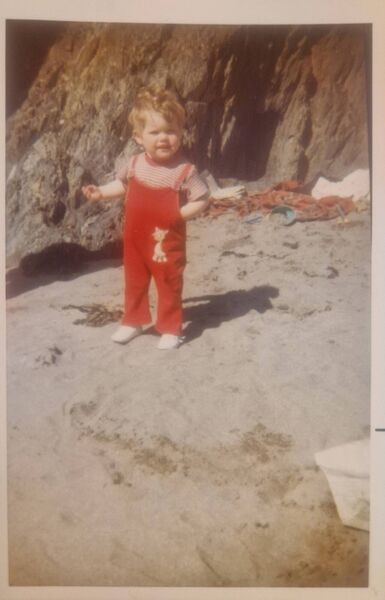
Family days in Garrarus 1974.
Waterford features a coastline that is rugged, exciting, interesting and treacherous. The media saturates us with breath-taking footage of Sardinia, Mauritius, Bali, the Greek islands, but none compares to that of the Déise.
Vivid green fields roll like carpets beneath stark white lighthouses atop jagged cliffs that descend into aquamarine depths of rocky coves and inlets. Maram grass swishes hypnotically in the wind over our ever-shrinking dunes, flanking long stretches of golden sands.
Oystercatchers gather in harlequin flocks, their red beaks drawing the eye, as they feed at the edges of our ebbing tides along pebbled strands.
Picturesque cliffside cottages stand the test of time, overlooking many a rural Waterford cove; Counsellors Strand, Annestown, Boatstrand, Ballyvoyle and more. From Woodstown to the Youghal bridge, every small boreen that veers away to your left from the main road draws your steering wheel in the direction of the most beautiful seaside havens.
Sea-swimming has recently become all the rage. What started as a yuppy craze along the coastal hotspots of South County Dublin has now expanded the circumference of our emerald isle. Dry robes are the trendy norm as throngs of wild swimmers descend, en masse, to what were once, for the majority of the year at least, deserted beaches.
Donning swimming booties, silicone swim caps and neoprene gloves, they plunge themselves into the icy Atlantic waters, some lolling on their backs like sea otters, scrubbing their bare shoulders and faces with seaweed adrift on the surface (a questionable practice considering the amount of dog foul deposited on a tide line).
Mobile saunas and coffee shops have fast become part of our rural landscape. For women and men of a certain age, the daily sea swim has replaced the old Irish tradition of going to mass, where the yearning for a morning chat is fulfilled at the communal dip in a somewhat larger water font.
When I first noticed the dry-robe trend taking off, I remember walking in beautiful Ardmore, under the watchful eye of what must be Ireland’s finest round tower. Leaving the village far behind, we approached the twisting track that leads to Ballyquin. Passing what was previously an abandoned stretch of waste-ground, we found it was now the sea-swimmers’ parking lot with SUVs and electric hybrids clustered into a small cul-de-sac, while the swimming brigade took to the waves, their abandoned something-or-other-doodles left to the four winds while the swim was underway.
As dippers emerged, their thighs and arms vivid pink from their submersion in the cold water, they enveloped themselves in these thermal robes, convening with flasks of hot beverages to warm their souls.
Later on our walk westward, we passed the sign-posts on the cliff for St Declan’s Way and that was when my daughter pointed out to me that the origins of the dry-robe may have been steeped in Ardmore history after all, for right there, the unique depiction of St Declan himself appeared to be donning, none other than… a dry-robe too!
I can hear ghosts of the old swimming baths around the country whisper on the breeze; “Tis a long way from saunas and decaf oat milk macchiatos we were reared.”
We Irish are lucky to have such a choice of swimming locations and Waterford’s coast must certainly be top of the range. If we want a smooth surface beneath our feet, we can choose from a selection of flat sandy beaches. If it’s a honeycomb reef or shipwreck we seek to explore, then throw on our goggles and an abundance of such locations await. And should we want a fast and furious plunge into deep water, there are many such purpose-built diving spots littered about our coast.
As a child, the seaside was part and parcel of life. Although I grew up in the city centre, the seaside was a stone’s throw away from us. Seagulls frequented the quay river (pronounced kay by the real Waterfordians of old). Our proximity to the water, be it fresh or salt, always made us proud to live in a richly historic maritime city. Whenever I am on my travels, a maritime museum is always on my hit list; the most fascinating place to learn about people of the past; their strength, determination and character all challenged and shaped by the sea.
For those who lived in coastal villages and townlands, earning their crust from fishing its waters, the sea was feared and, more importantly, respected. Many monuments are erected as memorials to the numerous ships and lives lost at sea in our waters. For Waterford’s city dwellers, the seaside was a recreational must, day after day in the summer and every weekend throughout the cold, dreary winter months, where the sea air refreshed us, repairing our frail forms by sniffing salt water up our noses to rid ourselves of a winter cold.
A small bottle of salt water would be brought home to the unwell, better than any antibiotic. We swam a longer season than most, our weekend swims occasionally continuing into October, if the weather was kind, but rarely after Halloween.
Our urge to swim outside of the summer months was met with a scolding rhyme by my grandmother, “April and May - shun the sea, June and July - swim ‘til you die!”
Fear and respect for treacherous Atlantic currents and tides remained deeply knotted in the guts of my elders.
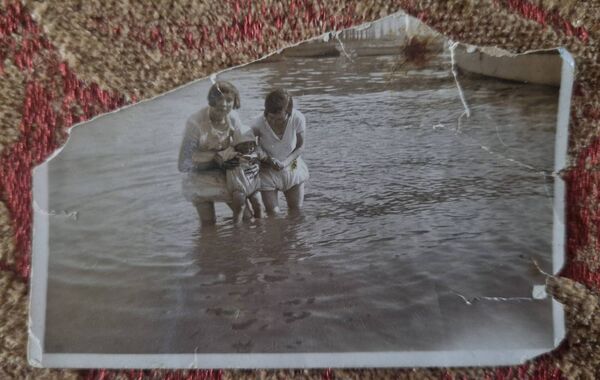
My wonderful grandfather, John Joe, a quiet man, whom I adored, regularly related the story of cockle-picking with his mother and his sister Lizzie in Woodstown. This would have been around 1910. He recalled the tides of the estuary sweeping in around the mud-flats unnoticed by him or his mother as they searched for cockles on their afternoon visit to the strand.
When his mother came to realise that they had been marooned by the tide, she abandoned the task at hand and scooped her two young children into her arms, wading, chest-deep, through the rising water to safety. Grandad always reiterated, “She managed to carry us both to the shore, and remember, she was only a little slip of a woman. Only a small slip of woman.”
His admiration for her calm and resolve in such a predicament remained with him to the grave. It was one of his favourite stories to share with me and though he repeated it time and again, I never told him so and listened as if hearing it for the first time.
Woodstown was a winter walk for me as a child, where chestnuts and razor shells were collected. I only ever recall swimming there once, when we had a picnic on the sand one summer day. We were suspicious of the water quality as it was more river than sea, and pollution from factories, tanneries and slaughter-houses, combined with raw sewage of the city, flushed into the River Suir upstream, left a lot to be desired.
Small pink shells scattered along the shore provided great amusement for me as a little girl, filling my pockets with my bounty. The Saratoga Bar was a welcome retreat where refreshments were sought after a bracing walk, or a glass of red lemonade in the thatched pub at Callaghan on the way home.
In high season, buses to Dunmore and Tramore were always packed with sea swimmers. People travelled light; togs and a towel, and, if you were lucky, a snorkel and mask. No sunscreen, rarely a sun hat and occasionally a bucket and spade. Nobody had a wet suit – they were for deep-sea divers.
A few bathing boxes still existed on the Lady’s Slip in Tramore right into the 80s; only then used for storing deck chairs, which could be rented for a few pence. The days of bathing boxes and separate swimming quarters for gents and ladies is long gone.
The Guillamene sign 'Men Only' still exists and I hope it remains, as it is a testament to the traditions of old Ireland when respect for ladies’ and gents’ privacy was paramount.
My grandfather possessed a swimming costume that was out of the ark, as they say. It was maroon and white, in sailor style, with long trunks to the knee, and a vest top, with only his arms and lower legs exposed.
These were the height of fashion in the twenties and thirties, gradually decreasing in coverage until we got to the skinny trunks of the seventies. Ladies’ fashions changed too, and the freedom to swim in body-hugging togs compared to a veritable night-gown must have been a fabulous revelation.
The 1920s fashion police would find it alarming should they walk a beach today, littered with skimpy thongs and string bikinis.
Tramore’s Ladies Slip was our regular weekday haunt. Living in the city centre, we caught the bus outside the ESB offices on The Mall, or sometimes at the Clock Tower.
The bus was always bursting with passengers, many pensioners wearing straw hats and summer wardrobe, taking the afternoon outing to sit on the prom and watch “the style” pass by. The generation that preceded mine mourned the loss of the Tramore train – a sin that was never forgotten or forgiven by my parents and their peers. Their memories were shared with us, and we could almost smell the smuts from the train’s funnel.
Tramore was simply gorgeous. The screaming of revellers on the amusements, the seagulls swooping overhead, the waves roaring in from the horizon, that warm salty breeze and smell of fresh fish and chips that welcomed you onto the Prom.
Ponies and traps trotted along the beach all day, offering a spin to visitors for a few bob. No body boards or booties, no fear of jelly or weaver fish.
Ignorance was bliss. We were not qualified swimmers – simply learning to swim in the sea at Garrarus, Kilfarassy, Ballyvooney and Stradbally, using trial and error. No weekly swimming lessons in a chlorinated pool. Just practice and determination to get those bloody arm bands off before the summer ended; the sting of lacerated sunburnt arms was the greatest incentive to learn to swim unaided.
Waterford has always been a great host of the Christmas Day Swim. It wasn’t something that was hugely celebrated in our house, my father believing that it was only bravado, braving the Guillamene on Christmas Day to have your photo plastered across the newspaper.
My first Christmas with my husband, I joined him and his friends as they ventured into the Guillamene’s surging tide, cold enough to take my breath away, but we were young and in love and happy to jump into the icy sea together.
The Christmas Day Swim has become a huge fund-raising event for all sorts of clubs and charities and our own village in Stradbally has a large cohort of swimmers venturing into the surf, despite the brutal North winds cutting down onto the beach.
So, whether you’re a traditionalist like me and you like to throw on simple togs, taking a dip when the humour strikes, or you wear all the modern paraphernalia to make your swimming experience as luxurious as possible, you don’t have to go very far.
And don’t feel the need to strip off on Christmas Day, parading your curves for the throngs standing watch in their North Face puffa jackets.
Bide your time, choose your beach and take the plunge when the moment is right for you. And if you forget your togs, don’t worry, the world is gone mad anyway, so wear your birthday suit! You never know, you might make someone’s Christmas!