An afternoon spent at Waterford's Africa Day
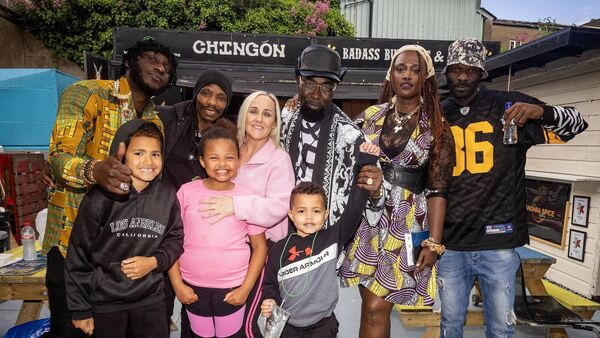
Pictured at Africa Day 2026. Photo: Joe Evans
Walking towards O’Connell Street on Saturday afternoon, I have no doubt I’m heading to the right place. Music is echoing all the way down through John Roberts Square. Today is Africa Day in Waterford – an annual event celebrating the cultural, political and economic ties between Ireland and Africa.
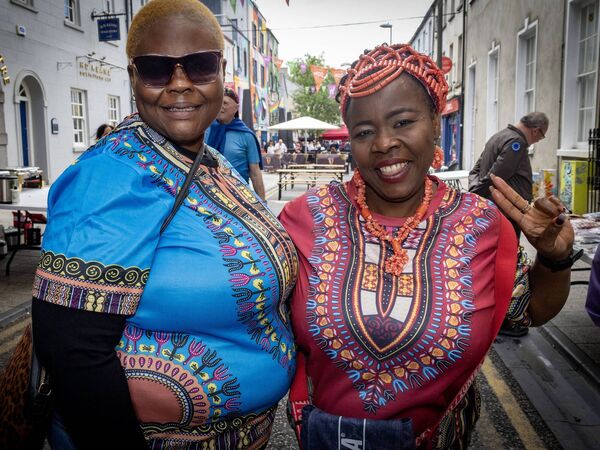
On my way to the music stage, I stop and browse the markets. I get chatting with Anna, a jewellery maker based in Tramore. Originally from Tanzania, she has been living in Ireland for 12 years. She was selling her handmade traditional Masai jewellery at a stall. She explained to me that the Maasai tribe exists in East Africa in Tanzania and Kenya. She sources all of the beads for the jewellery from Tanzania. She does markets for the entire season, and in the off-season, her full-time job is making jewellery for the next season.
She said she got the idea for her business on a holiday in Tanzania. She said: “I went to Tanzania for a holiday and I brought back some jewellery as gifts, then I started thinking maybe I should start making them.”
Anna taught herself how to make jewellery through YouTube.
Now she lives in Tramore, and she likes living in Ireland because of the “lovely people”.
After some retail therapy, the spicy, earthy smell of jollof rice practically summons me to Osas Iyamu Usideme, a Nigerian woman who runs her own catering business, Kosa Katering. She asks me what dish I would like to try and I ask her to give me a bit of everything. The caramelised plantains contrast nicely with the fiery jollof rice, and the creamy beans are perfectly spiced.
Osas learned to cook in Nigeria at the age of eight. She became obsessed with the cooking programme ‘Maggie's Kitchen’.
“It gives me pleasure to serve people.”
She tells me that “Irish people have embraced African food in the last two decades.”

She really enjoys “sharing my culture” with Irish people.
I ask her what her favourite thing about Nigerian culture is and she replies simply, “Our colour.” She continues after a moment, “We shine. We see the bright colours everywhere.”
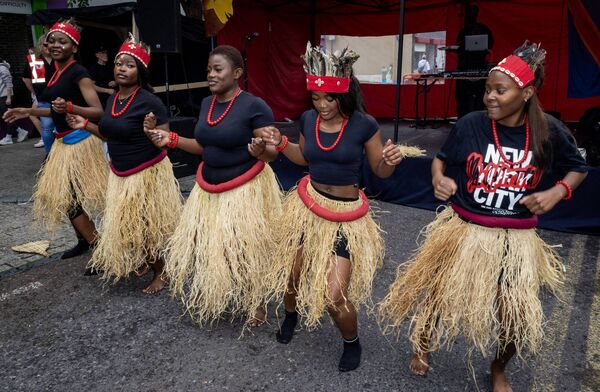
As I munch on my lunch, I sit down and take in a performance from Michel Lukubama Lumbo, a Congolese musician who charms little girls and older ladies alike with his charismatic stage presence.
I make my way down to Hanover Street, where I bump into some friends doing face-painting, and I take a selfie with a cute little lamb. There are also some bunny rabbits that kids (and honestly, adults) were queuing up to pet.
It's on this street full of games and fun that I chat with Anne Nolan, one of the organisers of the day. We talk about how Africa Day is quieter than usual, which Anne attributes to the weather and the fact that Pride is on the following day. She points out that Africa Day is not just about celebrating African culture but about celebrating the trade between Africa and Ireland. I ask her what some significant things that Ireland and Africa trade.
She replies, “A lot of stocks and things.”
Anne also told me that this year, there was a special emphasis on the Congolese community in Waterford after the death of Yves Sakila, a Congolese man who died on Henry Street in Dublin after being held down by security guards. Anne said that a book of condolences will remain open for the week in the Waterford Cultural Quarter building.
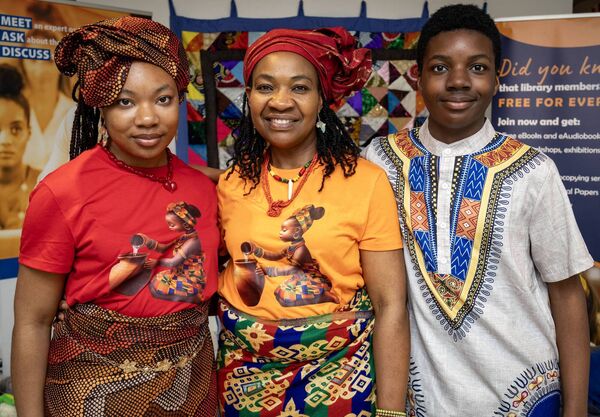
Finally, my day finishes up with a wonderful talk by Benedicth Ogechukwu Mbala, an Igbo woman who now works as an SNA. She spoke about the importance of names in lots of African cultures and also how children are a lot more independent in Africa than in Ireland, which she thinks gives them more confidence as adults.
On one of her slides, she wrote that where she’s from, “Joy is taught, shared and passed down like an inheritance.”
I could certainly see that at work as I watched younger Africans watch the older people in their community dance, sing, eat and laugh.