80 years ago: Waterford's 'Independence Day'
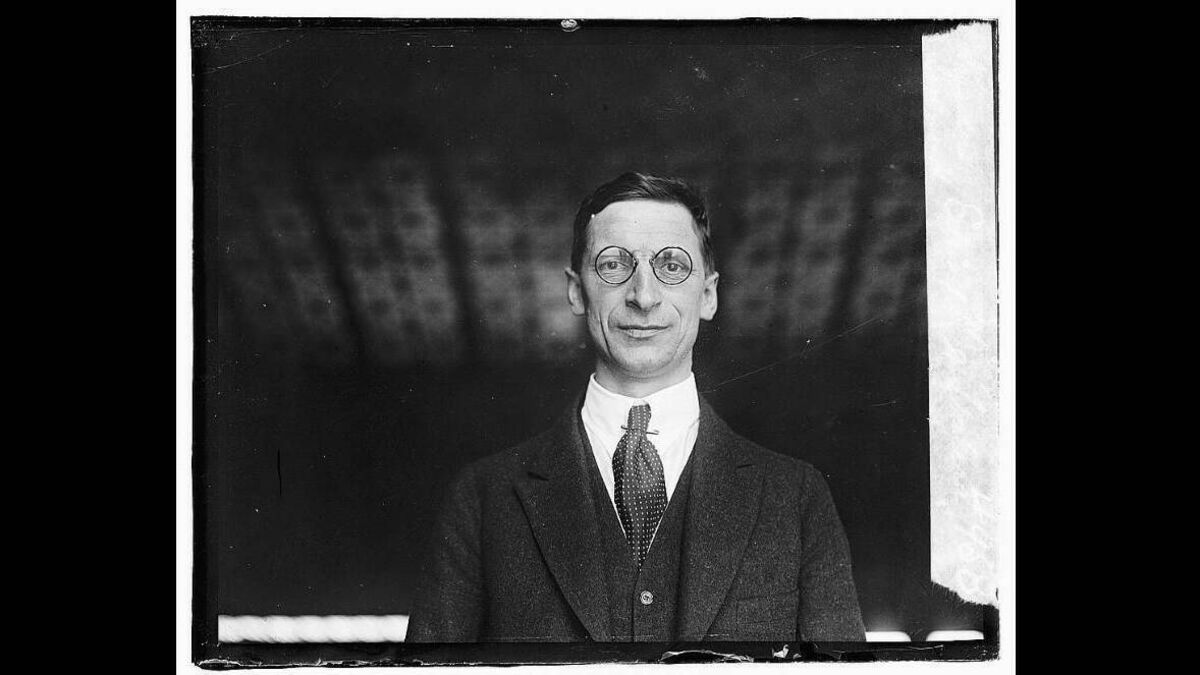
Éamon de Valera visited the Déise on January 28, 1946 to become a freeman of Waterford. Other notable honorary freemen include Mary Robinson, John Treacy and Gilbert O'Sullivan
On January 28, 1946, then-Taoiseach Éamon de Valera stepped foot into Waterford and was awarded the freedom of the city.
An 80-year old archive article from the Waterford News & Star recalls the historical day, with the newspaper’s anonymous ‘Special Representative’ lauding one of Irish history’s most influential, but polarising figures.
The report coined de Valera’s visit “Waterford’s Independence Day”, describing the Taoiseach as the “man of destiny.”
Upon arrival, de Valera is quoted as describing Waterford as “a great city.”
“Various invaders chose it as a point of attack, and each successive wave that came was not too long here until they became so Irish that they were termed ‘more Irish than the Irish themselves,'” de Valera said.
The report chronicled the day that began with de Valera outside the grounds of Good Shepard Convent before being escorted towards City Hall by thousands of adoring citizens.
At City Hall, he was joined by Waterford Mayor William Kenneally, Minister for Posts and Telegraphs Patrick Little and Waterford City Manager Liam Raftis.
Following the signing of the freemen’s roll, de Valera retreated to a banquet at the Adelphi Hotel where he delivered an address draped in nationalist rhetoric.
“This is an independent sovereign State,” the report quotes de Valera.
“We have our Constitution and our Citizenship Law, and no citizen of ours owns any allegiance to Britain, or to the British Crown.
“We are not British subjects, and, as was said at the time of the passing of our Citizenship Act, it is an impertinence to call us so.”
De Valera’s comments came against the backdrop of an Associated Press report detailing how Irish actress Maureen O’Hara had been asked to renounce her allegiance to Britain upon receiving American citizenship.
“Miss O’Hara was a natural-born citizen of the State and owed no allegiance to Britain,” de Valera said.
The reporter described de Valera’s speech as one of his most dramatic and all-compelling, with the quality to electrify a captive audience on full display.
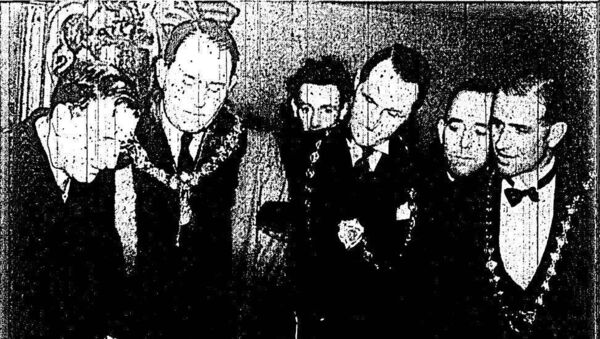
De Valera’s visit to Waterford came in his first term as Taoiseach, a role he relinquished in 1959 to become president- an office he held for a further 14 years.
In 1946, Ireland was still not a republic. De Valera’s musings during his visit to the Déise still mirror the topical issues Ireland faces in the present day.
He marked his status as a freeman of Waterford by first taking the plinth for the Irish language.
“I would like as one of my first acts as a Freeman of this city, to ask you to do even more than your part to restore the language; to help and encourage the children to speak it,” the report quotes de Valera.
“I appeal, particularly, to those of the older generation who can do so, to use it to the extent to which they can speak it.
“It is a sad thing to think that we have need not lost our language to the extent which we have lost it. There was no need whatever for such a loss.
“No power of compulsion or coercion could have taken it from us. They could not have come, with their bayonets, into the firesides and say to the fathers and mothers: ‘Don’t speak Irish to your children.’
“Let Waterford play the part it can play.”
While the Irish language has been classified as an endangered language by UNESCO since 2021, a cultural revival spurred by film and music has been widely reported.
The Irish language served as a key cornerstone of President Catherine Connoly’s successful run to the Áras, sweeping 66.91% of the presidential vote in Waterford.
De Valera also reflected on the idiosyncrasies of the Decies dialect. DeValera was raised by his grandmother in Bruree, Co. Limerick- an area that was touched by the dialect.
“It was something of a revelation to me to discover that the dialect of the Decies had extended over that whole area.
“The Irish which I learned had been the dialect of Connacht.
“I think if I had known that it was the Decies dialect which had been the dialect my grandmother spoke, I would have tried to learn that dialect and would have used it rather than any other.”
The full report from the Waterford News & Star published on February 1 1946, can be viewed on the Irish Newspaper Archive.