Fatal shot to back killed George Nkencho, inquest hears
Seán McCárthaigh
One of six gunshots fired by an armed garda at George Nkencho which struck him in the back proved fatal, according to the State pathologist who carried out a postmortem on his body.
Kathleen Han Suyin told an inquest into the death of Mr Nkencho at Dublin District Coroner’s Court that one or possibly two of the six gunshots fired by a member of the Garda Armed Support Unit had hit him in the back.
Dr Han Suyin said gunshot wounds had caused damage to the deceased’s liver, spleen, lung, and heart.
“These injuries would have proven rapidly fatal,” the pathologist observed.
Dr Han Suyin attributed the cause of death to multiple gunshot wounds to the trunk.
In reply to questions from coroner, Myra Cullinane, she said the fatal bullet was the one she had identified as striking Mr Nkencho in his back, which caused damage to his heart and lung.
The pathologist said she could not conclude definitively whether a second gunshot wound to the victim’s back was where a bullet had entered or exited his body.
However, she confirmed it had not hit any of his vital organs.
Dr Han Suyin concluded that none of the bullets were fired “at close contact” but at “an intermediate range.”
However, she clarified that it meant the shots were not fired from a distance of at least 50 centimetres or “one step away.”
Dr Han Suyin said four bullets had caused “through and through” wounds as they had passed through and exited the deceased’s body – three via the chest and one through his left arm.
The former State pathologist, who gave evidence via videolink from Brunei, said her examination had found that two of the six bullets fired had remained within the deceased’s body.
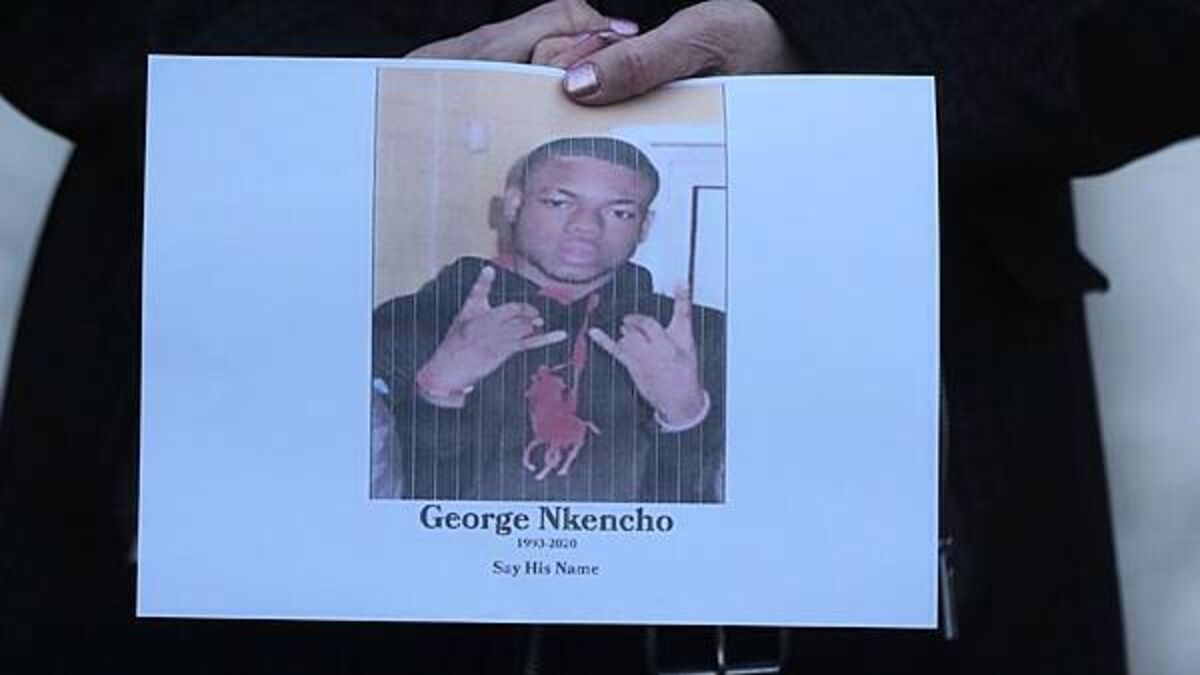
Mr Nkencho (27) – the eldest of five siblings whose family originally come from Nigeria – sustained fatal injuries in the incident in the driveway of his family home at Manorfields Drive, Clonee, Co Dublin on December 30th, 2020.
The inquest heard he had carried out an unprovoked assault on a manager at the nearby Eurospar store in Hartstown a short time earlier, as well as threatening staff with a knife.
The deceased’s family claim the level of force used against him was disproportionate. However, the DPP directed that no prosecution should arise over the circumstances of Mr Nkencho’s death following an investigation by Fiosrú, previously known as the Garda Síochána Ombudsman Commission.
Dt Han Suyin said the victim had also suffered multiple rib fractures as a result of the gunshot wounds.
She also found three distinct puncture wounds on Mr Nkencho, which she believed were consistent with prong marks from being tasered.
However, she found no evidence of any blistering on the deceased’s face or swelling of his eyes, which might have indicated the effects of pepper spray.
The inquest had previously heard that one of the ASU members had attempted to stop Mr Nkencho by deploying pepper spray in his face, but it appeared to have no effect.
Toxicology results proved negative for alcohol and drugs.
In reply to a question from Dr Cullinane, Dr Han Suyin said it was not possible to determine the sequence in which the six bullet wounds occurred.
Asked why the first five gunshots fired at Mr Nkencho appeared to have had no effect, the pathologist said it was a “complex” situation and depended on which injuries the victim had sustained first.
She told counsel for An Garda Síochána, Ronan Kennedy SC, that she found no evidence of any injuries consistent with a forcible kick to Mr Nkencho’s back.
The inquest had previously heard claims that a member of the ASU had kicked Mr Nkencho in the back while he was on the ground in an effort to take the knife off him.
A pathologist who carried out a postmortem on behalf of the Nkencho family, Jack Crane, said he believed the deceased had sustained five or possibly six bullet wounds.
Professor Crane explained that it was possible that one of the bullets might have passed through both Mr Nkencho’s arm and his torso.
However, Prof Crane – a former State pathologist in Northern Ireland – said his findings were not at variance with those of Dr Han Suyin.
He said the bullet which passed through Mr Nkencho’s heart would have been “rapidly fatal but not immediately so.”
Prof Crane said Mr Nkencho’s movement in the short period during which all six bullets were fired could have been a result of a wound from the initial gunshot.
He expressed surprise that the deceased’s body and clothes had not been swabbed to test for pepper spray at the original postmortem.
The inquest before a jury of five women and four men continues on Thursday afternoon and is expected to conclude on Friday.
As part of a pilot project BreakingNews.ie has used AI to suggest headline options for this article. The final headline was chosen and edited by BreakingNews.ie journalists. Find out more