10c cut to petrol and diesel, delay to carbon tax increase in €505m fuel measures
James Cox and PA reporters
6.05pm
An increase in the Carbon Tax has been postponed from next month until October, in new measures announced by the Government.
A new package was announced by Taoiseach Micheál Martin, Tánaiste Simon Harris and junior transport minister Sean Canney in the wake of a week which saw fuel depots blockaded.
The new scheme will also see:
- The cut in excise duty extended to June, a 10 cent cut on petrol, a 10 cent cut on diesel and 2.4 cent cut on green diesel from midnight on Tuesday.
- A fuel subsidy for farming and fisheries will also be included.
Martin said that "nobody had the right" to block ports and fuel depots and that this had been undertaken by a group with a "self-declared mandate".
5.50pm
The Taoiseach and Tánaiste are shortly expected to announce a package of supports in response to the fuel crisis.
A special Cabinet meeting has been called this evening to discuss the ongoing protests around the country.
The details of the Government's package of supports have yet to be revealed.
It comes as the Government will face a no confidence motion in the Dáil on Tuesday.
3.53pm
O'Connell Street in Dublin remains closed to traffic this afternoon, despite blockades being lifted there early this morning.
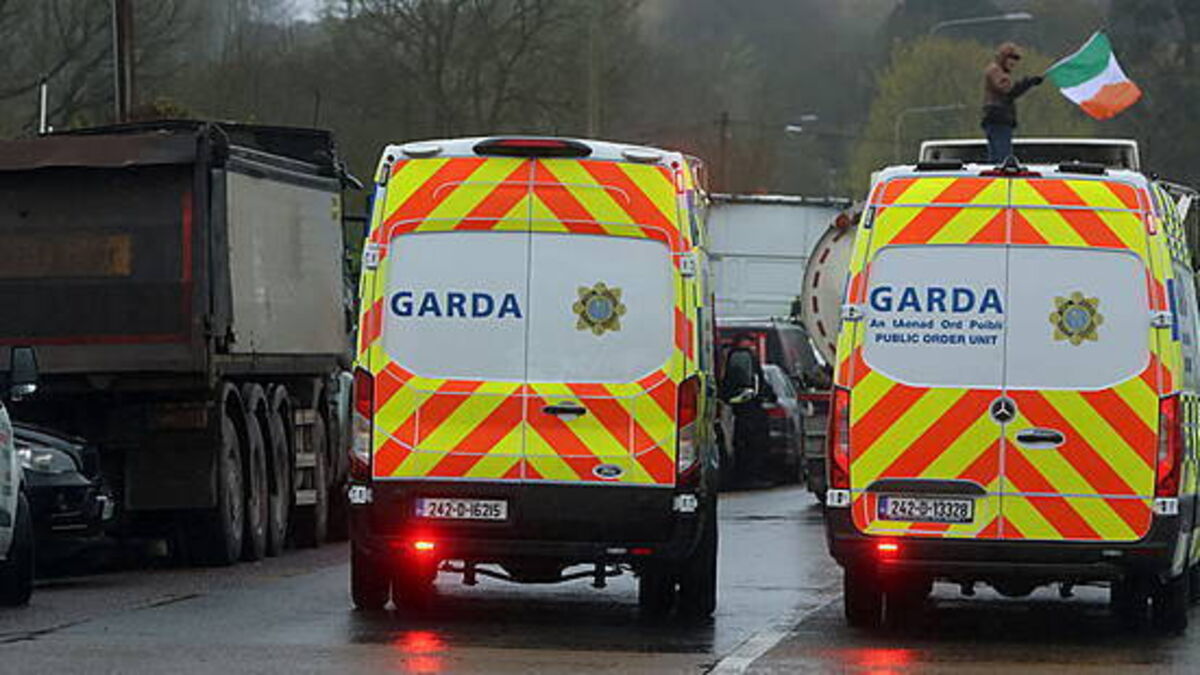
A number of protestors have remained around a Garda cordon.
Luas Red and Green line services remain suspended through the area.
Dublin Bus continues to advise passengers of service disruption and is asking people to check its website.
3pm
Sinn Féin will call a motion of no confidence in the Government after a week of major protests over the fuel crisis.
The party's leader, Mary Lou McDonald, said her party had met on Sunday morning and had decided to move the motion.
Several of those engaged in protests – which involved blockades of critical infrastructure and severe disruption to the motorway network that strangled fuel distribution in the country – had sought such a move.
The Social Democrats, People Before Profit, and Independent Ireland have said they would back the motion, while Labour and the Greens – while heavily criticising the Government – said they would consider the text before making a decision.
14:45pm
All three blockades at fuel depots in Cork, Galway and Limerick have now come to an end.
Protestors were applauded by crowds of supporters as they left Foynes Port at 1.30pm on Sunday.
While members of the Garda Public Order Unit cleared the blockade at Galway Docks this morning, and at Whitegate oil refinery on Saturday.
Fuels for Ireland has welcomed the reopening of depots, but warns it will likely take up to 10 days to restore supply to filling stations around the country, almost a thousand of which have now run dry.
Gardaí also cleared the trucks and tractors blocking O'Connell Street in Dublin on Sunday morning - although the street remains closed to traffic at the moment.
12pm
A fuel blockade that has been erected at the entrances to the Shannon Foynes Port Company and fuel terminal at Foynes, Co Limerick, is to stand down at 1pm this afternoon, organisers said.
A decision to open the blockade, which was erected six days ago, came after a vote among protestors was taken earlier.
It was anticipated that a garda public order unit, which had opened blockades at Cork on Saturday and Galway on Sunday, would travel to Foynes next.
The protest at Foynes had remained peaceful throughout.
Speaking Sunday, Independent Ireland TD, Richard O’Donoghue, who supported the blockade at Foynes, said: “I've just had a meeting with the people that have been here for the last five and six days, here in a peaceful protest here in Foynes, and we've taken a vote with the hauliers, the contractors, agriculture contractors, the people that have been here, and the community.”

“We are going to pull out of Foynes here peacefully, as we came in peacefully, at one o'clock,” said Deputy O’Donoghue.
“And I'd like to thank every one of the communities, the businesses, and the support that we've had from our homes.”
“We’re on our way home, we’re leaving at one o'clock. Thank you,” he said.
Additional reporting by David Raleigh
11am
The Defence Forces have assisted gardaí with clearing a makeshift barrier erected by protesters blockading Galway docks.
Footage posted on social media by An Garda Siochana showed a Defence Forces heavy-lift recovery truck – nicknamed ‘the Beast’ – driving through the barrier constructed with pallets and logs.
A second heavy-lift recovery truck operated by the Defence Forces was also at the scene while gardai worked to restore access to the harbour.
A Garda Operation is ongoing at Galway Docks to ensure critical supplies of fuel to maintain critical emergency public services, including Ambulance and Fire Services.
Garda Public Order Units have been deployed.
Blockaders must comply with Garda directions. pic.twitter.com/rntbR4DMR3
— An Garda Síochána (@GardaTraffic) April 12, 2026
8:45am
Around 20 large vehicles and tractors remain on O’Connell Street and the quays in Dublin following a major police operation to clear the blockade in the early hours of Sunday.
Steel barriers have been erected on surrounding roads to prevent further access.
A small group of protest participants and supporters remained at the scene at 8am.
A Garda presence was monitoring the cordon while street cleaners cleared debris.
Fuel protesters on Dublin’s O’Connell Street got “ambushed” by an “army” of public order gardai, according to a spokesman for the blockaders.
Christopher Duffy said the vehicles are clearing out of the street, but he does not think the overall protests are over.
Speaking about the overnight Garda operation on O’Connell Street, Mr Duffy said he was “upset”, “disappointed” and “angry”.
He said protesters had not been asked to move since the blockade was established on Tuesday.
“Nobody in the city of Dublin or the country could say our assembly was anything but peaceful,” he said.
Mr Duffy said he believes protesters were denied due process, adding: “We got absolutely ambushed here last night by what I can only describe as an army of (public order gardai).
“There were gardaí lining the street, lads on horseback.”
A blockade of O'Connell Street has been cleared in a late-night garda operation, ahead of an emergency Cabinet meeting to sign off on measures the Government hopes will bring all protests over fuel costs to an end.
The protests – which involved blockades of streets in the capital, Ireland’s only oil refinery, and key depots – strangled fuel distribution across the country and prompted an escalated policing response that resulted in several arrests and public order gardaí deployed in Cork, Galway and Dublin.
Participants – largely led by hauliers, farmers, and agricultural workers – began separate but co-ordinated action on Tuesday with slow-moving convoys and outright stoppages on major motorways, as well as blockades of critical infrastructure.
Some protests rolled overnight into Sunday morning, with spokesmen calling on the Government to take urgent action to reduce fuel costs, which they say are at unsustainable levels and will lead to people going out of business.
The Government is expected to sign off on fuel-cost measures on Sunday evening, but it remains to be seen if it will convince protesters to call off their actions before the return of schools on Monday adds to pressure on the roads.
An Garda Síochána cleared a blockade of the Whitegate oil refinery in Co Cork around lunchtime on Saturday and vowed to implement further enhanced enforcement actions.
It saw physical clashes between protesters and gardaí, who used pepper spray during the hour-long operation, which resecured access for fuel trucks.
A Garda Operation is ongoing at Whitegate Refinery to ensure critical supplies of fuel to maintain critical emergency public services, including Ambulance and Fire Services.
Garda Public Order Units have been deployed.
Blockaders must comply with Garda directions. pic.twitter.com/qhirYj9DPC— An Garda Síochána (@GardaTraffic) April 11, 2026
Gardaí were later called to a similar action at Galway harbour, where hundreds of protesters gathered in pouring rain while restricting access to a fuel depot by blocking the way with tractors.
Members of the Public Order Unit, wearing protective gear and batons, were at the scene for hours overnight.
On Sunday morning, An Garda Síochána announced all blockades in Dublin had been cleared following an overnight operation on O’Connell Street.
It said illegally parked vehicles would be removed and blockading vehicles were removed under escort.
Garda Commissioner Justin Kelly had vowed to step up enforcement against fuel-cost protesters, “endangering the state” by blocking critical infrastructure.

Protesters’ demands for meetings with the Government were not acceded to, but relevant ministers held talks with established national representative bodies on Friday and Saturday.
These meetings concluded with a “substantial” package involving a temporary fuel transport support scheme and “temporary fuel support”.
It is understood that the transport support scheme will see direct payments to businesses in the sectors affected by high fuel costs.

A senior source said the scheme will be part of a broader package on the fuel crisis.
The engagements included Irish Road Haulage Association president Ger Hyland, who said there were “the bones of an agreement” with the Government.
He added he hoped the “substantial package”, understood to include a direct payment scheme, would be agreed by Sunday morning.
The Cabinet is due to meet on Sunday afternoon to sign off on the measures.
The pledge of a “substantial” package was not enough to dissuade protesters from their blockades without Garda intervention on Saturday.

Commissioner Kelly said: “Some people have decided to escalate an already difficult situation by blockading critical national infrastructure such as fuel depots and refineries.
“This has resulted in fuel shortages that are directly impacting emergency services such as hospitals, the ambulance service and the fire service, as well as businesses and the general public.
“These are blockades. They are not a legitimate form of protest.”
He said: “We gave the blockaders fair warning that we were moving to enforcement and they choose to ignore it and continue to hold the country to ransom.”
A small number of Defence Forces personnel with heavy-lift recovery trucks have been on standby to assist gardai with moving large vehicles if needed.
The escalated enforcement action came after Fuels for Ireland chief executive Kevin McPartlan said around 600 of the 1,500 filling stations in the Republic of Ireland had run dry on Saturday morning.

He predicted the number “would grow quite dramatically” if the blockades on Whitegate in Galway and Foynes, Co Limerick, continued.
Blockades have resulted in full closures of parts of the M50 ring road around Dublin, as well as other major motorways, although Gardai announced blockades on the M50 at junctions five and seven had been cleared on Sunday morning.